


Pillow Talk is where Wanton Republic gets into bed with the people who know the past best: historians, professors, authors, actors, and other interesting people who have spent an unreasonable amount of time thinking about people who are long dead.
We talk history, romance, sex, scandal, culture, and all the messy little details that tend to get cleaned up before they make it into the textbook.
Consider it intellectually stimulating conversation under the covers.
I Lost My Podcast Virginity!!!
This is the first-ever episode of the Wanton Republic podcast, which means I have listened to it approximately one million times and found seventeen new things to worry about on each listen.
I am, unfortunately, my own biggest, and most unreasonable, critic. So I feel uniquely qualified to tell you this: I have genuinely loved listening to this episode.
That is an extremely good sign.
When I started thinking about what I wanted this podcast to be, I really only had one rule: make something I would actually want to listen to. Not history delivered like homework. Not a solemn recitation of Important Facts by people afraid to admit that the past was populated by actual human beings. I wanted conversations about the parts of history that make you stop and say, Wait. What?
For my first episode, I spoke with historian Dr. Rachel Hope Cleaves, professor at the University of Victoria and author of Charity and Sylvia: A Same-Sex Marriage in Early America. We talked about same-sex relationships in early America, premarital sex, the history of kink, Victorian brothel menus, horny restaurants, aphrodisiac beans, James Joyce’s enthusiastic appreciation of farts, and the enduring historical truth that human beings have always been absolute freaks.
In other words, exactly the kind of history Wanton Republic was created for.
Here’s a little of what we talked about:
Every generation likes to indulge in the flattering delusion that it invented personal freedom and sexual liberation. We glance back at early America and picture a bleak, monochrome landscape of repressed Puritans, people swooning at the mere mention of an ankle, and scarlet letters stamped onto anyone who so much as looked at a neighbor sideways. To be fair, some of us really do have ankles that are just that sexy.
According to historian Dr. Rachel Hope Cleves, a professor at the University of Victoria and author of Charity and Sylvia: Same-Sex Marriage in Early America, that whole prudish narrative is absolute Victorian-era fiction.
When you strip away 19th-century moralizing, early American intimacy wasn’t a story of rigid restraint. It was pragmatic, deeply human, and full of surprising sexual realities.
Same-Sex Sexuality & Marriage in the 1800s
When same-sex marriage was being argued before the Supreme Court, Justice Samuel Alito famously remarked that the concept was “newer than cell phones.”
History has entered the chat, gang gang.
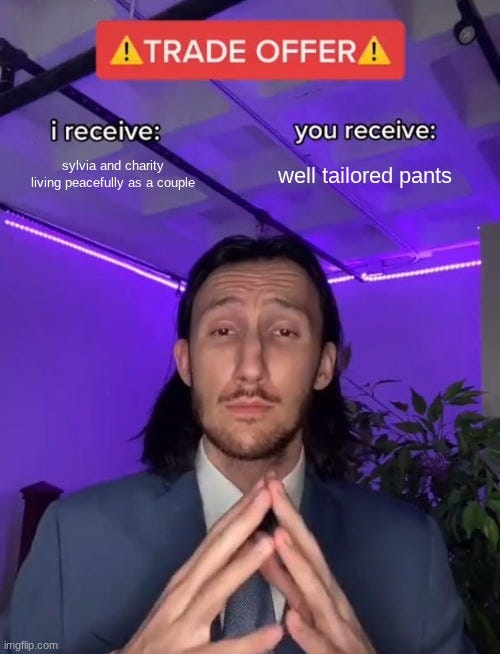
More than two centuries ago, two women in Vermont built a life together that complicates that narrative considerably. In 1807, Charity Bryant, an independent tailor, and Sylvia Drake moved in together in the small rural village of Weybridge. Over the next forty years, they built a business, shared a household, and became fixtures of their local community.
While researching the 19th-century poet William Cullen Bryant, Dr. Cleaves encountered a remarkable letter in which Bryant described the four-decade relationship between his two aunts, Charity and Sylvia. Borrowing the language of the Book of Common Prayer’s marriage ceremony, for better, for worse, richer, poorer, in sickness and in health, Bryant framed their partnership in the language of a traditional marriage.
Apparently nobody told them they had to wait for the iPhone.
But understanding how relationships like Charity and Sylvia’s could exist also requires forgetting some of our assumptions about how small early American communities actually functioned. Many assumptions that I held right up until this interview!
In early America, marriage and community recognition did not always revolve around the kind of state paperwork and bureaucratic machinery we associate with marriage today. And in a rural village where everybody knew everybody else’s business, enforcing every social rule to its absolute limit wasn’t necessarily practical. As Dr. Cleves explains in the podcast,
"And they lived in a small village, you know, which had a fluctuating population. But let's say in a given year, 700 people or something like that.Everybody knows each other. Like this guy is an alcoholic. And this guy beats his wife. And this guy is a liar, right? And like once you start calling out all the people in your town of 700 and punishing them for their transgressions,you have very few people left and you don't have a functioning town. So like the way like a rural community at some level like needs to have elasticity [in dealing with] people who are breaking the rules."
—Dr. Rachel Hope Cleves
In other words: everyone in town knew your business. They also had chores to do.
What The Scarlet Letter Got Wrong About Early American Sexuality
Forget what high school English taught you about early American romance. Nathaniel Hawthorne published The Scarlet Letter in 1850, looking backward at a Puritan world roughly two centuries removed from his own.
The actual ground truth of 18th-century sexual norms was surprisingly pragmatic:
The 40% Premarital Sex Rate: In some early New England communities, archival birth and marriage records suggest that as many as 40% of brides were already pregnant when they walked down the aisle.
So much for the ankle theory.
Premarital intimacy wasn’t some freak occurrence that automatically resulted in a woman being chased through town by a man ringing a shame bell.
The “Two-Orgasm” Biological Fallacy: Older medical theories of conception held that both partners needed to experience sexual pleasure in order to release their respective “seeds.” Female orgasm wasn’t merely acknowledged; under this theory, it was biologically necessary for pregnancy. Was the science correct? Absolutely not. Should we perhaps have kept this information from men? I say we launch a petition to reinstate the theory and universally agree that it is strict medical law. For public health.


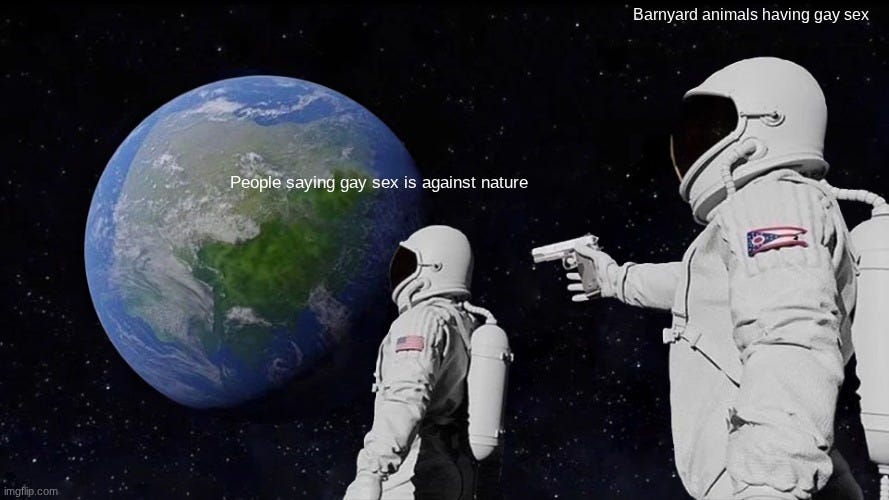
Sex Was an Everyday Reality: People also encountered sex in ways that would be bizarrely difficult for many modern Americans to imagine. Families lived in crowded quarters. Children grew up on farms. Animals mated in full view of whoever happened to be carrying the bucket that day, and animals did not politely restrict their sexual behavior according to human expectations about sex or gender. Nature was not exactly running a Disney Channel operation.
Same-sex sexual behavior among animals was there to be observed along with everything else. Which does raise one important historical question:
What do you mean you’re being two female sheep topping each other for gay Halloween???
The larger point is that sex wasn’t sealed away from ordinary life in quite the way our imagined version of the past suggests. People encountered bodies, reproduction, birth, death, animals, and physical intimacy as part of everyday existence. Turns out the past wasn’t less sexual than us. They just didn’t have incognito mode.
Proof We Didn’t Invent Kink
If you think unconventional bedroom tastes are products of Pornhub, Reddit, and whatever deeply concerning corner of TikTok your algorithm has decided you belong on, history would like a word.
Dr. Cleves is currently researching the history of kink, and one of the most remarkable documents she’s uncovered is a printed satirical “brothel menu” from the 1850s.
The document was enclosed in a letter sent by a clerk working for the mayor of Brooklyn to a friend. It presented itself as a mock meeting of Philadelphia brothel owners panicking over competition from New York, complete with an elaborate menu of services priced from $1 to $20 and options bearing names like “bear style,” “goat style,” and “stallion style.”
So yes, municipal employees were apparently spending less time on city permits and more time forwarding Victorian-era memes to the group chat.
And the historical record only gets weirder.
There are texts claiming beans were aphrodisiacs because the resulting gas was believed to inflate the penis. Centuries later, James Joyce would write his notoriously filthy and playful letters to his wife, Nora, displaying an enthusiasm for flatulence that your high-school English teacher very mysteriously neglected to mention.
As Dr. Cleves points out, whenever human beings throughout history could find fun, strange, inventive ways to enjoy themselves, they generally did.
Our ancestors were not waiting patiently for us to invent being freaks.
The Scandalous Origins of Fine Dining
Perhaps nowhere does the overlap between physical appetite and sexual commerce become more delightfully literal than in the rise of the modern restaurant.
Before late-18th-century Paris, eating outside the home generally meant something very different from what we now think of as “going to a restaurant.” At an inn’s table d’hôte, diners might sit together at a communal table, eat what was served, and eat it when it was served.
When the modern restaurant emerged, it wasn’t built for family dinners; it was built around sexual culture:
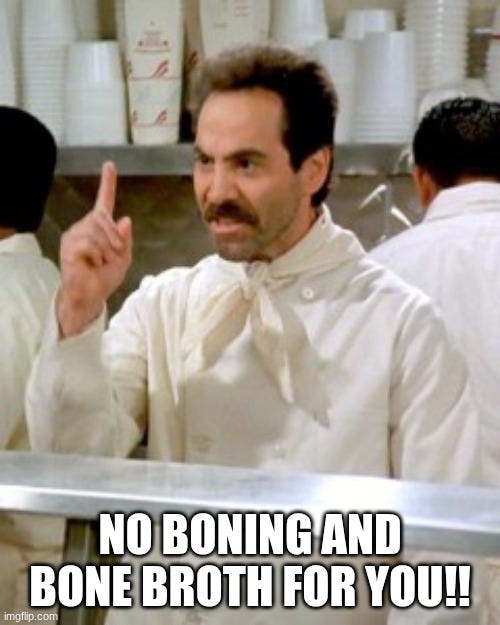
The Aphrodisiac Soup: The word restaurant originally referred to a rich, restorative bone-broth soup meant to restore the energy and “virility” of wealthy aristocrats before a night out. So, the original 'fine dining' experience was literally just horny aristocrats chugging glorified bone broth before hitting the town. Today we just call that Erewhon.
Private Rooms for Clandestine Encounters: Early Parisian restaurants introduced private dining rooms (cabinets particuliers) equipped with plush divans, specialized aphrodisiac menus, and doors that locked from the inside. Wealthy men rented these private rooms specifically to dine with lovers or specialized sex workers.
Crossing the Atlantic to NYC and San Francisco: As this Parisian model migrated across the ocean to 19th-century New York and San Francisco, most famously at spots like Delmonico’s, fine dining retained its edgy, disreputable aura. The restaurant, that great modern institution of anniversaries, awkward first dates, and paying $19 for broccolini, once carried a distinctly sexual charge. For decades, restaurants carried such a hyper-sexualized reputation that respectable women couldn’t dine in them without a male chaperone into the 20th century. Boning and bone broth was only for men. Sowwwwwwwwy.
Maybe the biggest mistake we make when looking backward is assuming that people in the past were fundamentally different from us. They weren’t.
They fell in love with people they weren’t supposed to. They had sex before marriage. They developed kinks. They made dirty jokes. They circulated obscene material among their friends. They worried about what the neighbors thought, and sometimes decided the neighbors could go fuck themselves.
The rules were different. The consequences could be very different. But underneath all of that were people doing what people have apparently always done: finding loopholes, seeking pleasure, falling desperately in love, and occasionally developing extremely strong opinions about beans.
So no, we did not invent sexual liberation.
We just invented better Wi-Fi for it.
Want More Naughty History?
This article only scratches the surface of my conversation with historian Dr. Rachel Hope Cleves. In the first-ever episode of the Wanton Republic podcast, we talk about Charity and Sylvia’s extraordinary relationship, what early Americans actually thought about sex, the history of kink, dirty historical documents, restaurants and prostitution, and plenty of other things your history teacher somehow never got around to mentioning.
Listen to the podcast at the top of this article!
And if this is your particular flavor of historical nonsense, subscribe to Wanton Republic for more conversations about the messy, romantic, scandalous, and deeply human side of the past.

