

There was nothing holy about Holy Ground.
The name itself was a joke. New York’s penchant for sarcasm is also historical, apparently. Holy Ground was a cluster of streets in lower Manhattan, near what we now call City Hall Park. The land belonged to Trinity Church. The buildings were leased to prostitutes, but the rent was collected on time.
During the American Revolution, prostitution didn’t hide in shadows in New York City. Honey, it thrived in plain sight, framed simultaneously as temptation and terror. Luckily for us, some soldiers wrote about Holy Ground, describing this Revolutionary-era red-light district as filthy, dangerous, and morally corrupt, while returning night after night.
This contradiction is the story of Holy Ground. I spent quite a bit of time researching Holy Ground for my grad school program. Here’s what I found…
A Night Out in the Revolutionary Era New York
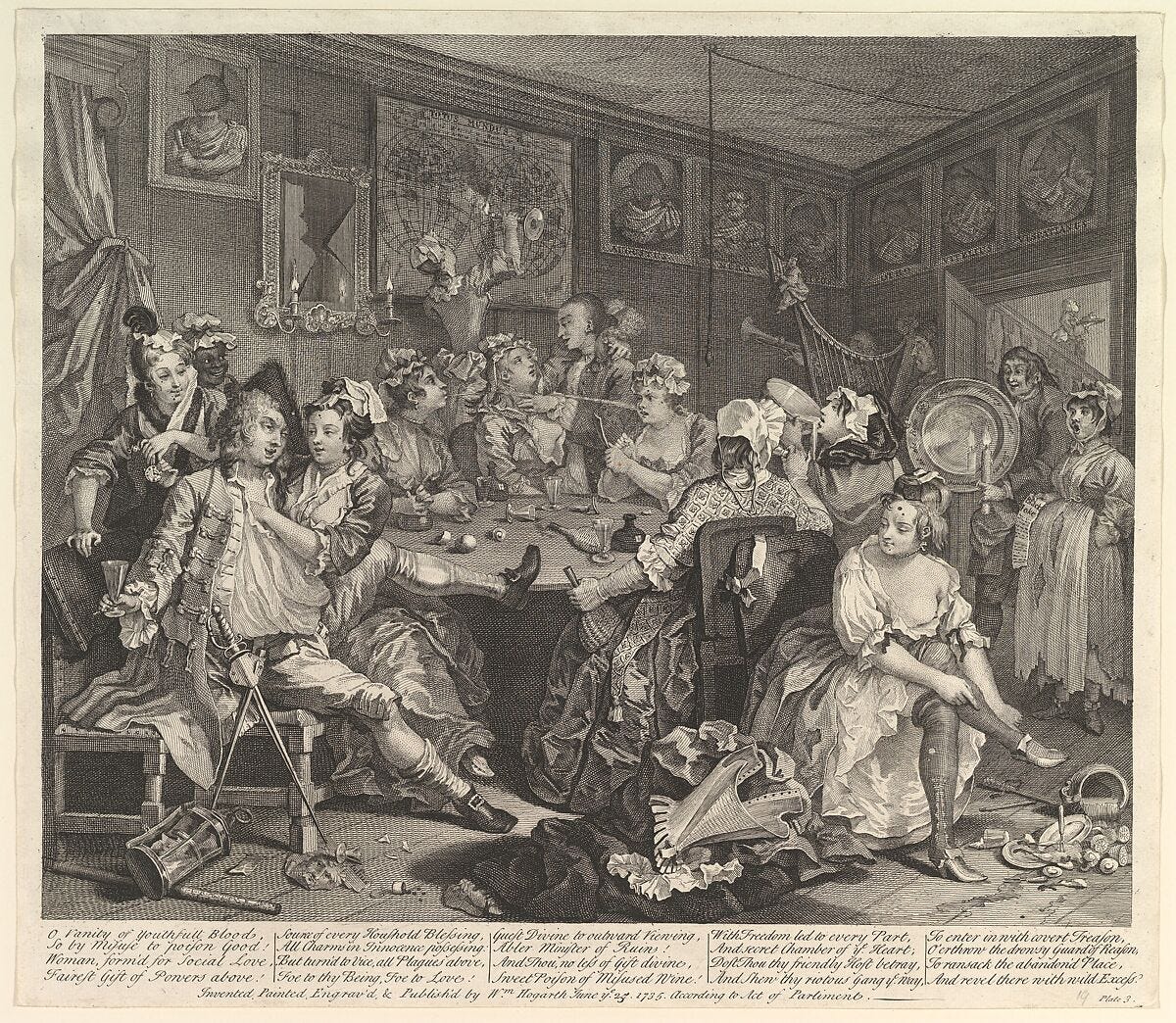
For young soldiers stationed in New York, the evening followed a familiar rhythm. First came the tavern: low ceilings, smoke hanging thick in the air, candlelight flickering. Ale flowed freely. So did bravado.
After days spent drilling for the military under the threat of humiliation and punishment, we could safely say that boozing wasn’t just these young men’s way of indulging. It was an early form of anesthesia. A way to forget the pain of military discipline. Order was paramount in the British military, and it was achieved by any means necessary. Those means were violent and mortifying. The cat-o’-nine-tails was used with regularity. Nine pieces of raw hide or thick hemp which made knotted cords were attached to a handle. Superiors would whip soldiers with it and the tails would tear the skin open. [Inserts paid partnership ad for BDSM toy.] The public shame of being made to “ride the wooden horse” could break a man completely.
I mean, I’d be running for the bar for a drink too.
Later in the evening, by the time the taverns emptied, groups of men spilled into the street, flushed and unsteady, daring one another toward the same destination everyone pretended not to know too well.
Holy Ground.
Candles burned in windows like flickering invitations toward pleasure. Women stood in doorways, skirts loose, hair unpinned, watching men approach. There was no coy seduction here. There was money to be made. And the women were good at it. But nobody likes a girl boss in the 18th century, guys.
The Women Men Couldn’t Stop Writing About
Soldiers’ diaries recount with enthusiasm on the women of Holy Ground, New York. Not just their sexual availability, but their brash manner. Their refusal to be polite. And the sheer volume of prostitutes in the area.
Many women worked and lived together, in pairs or small groups, often under the guidance of an older madam who understood how to keep things running smoothly in this Revolutionary-era sex trade. This would have been an unusual sight for these soldiers, especially those from small towns. Women were meant to live under the watchful eyes of their fathers and later their husbands. It was a man’s responsibility to keep women safe and away from trouble. Popular thinking of the time dictated that without the discipline and watchful eye of a man at home, women were naturally apt to find and make trouble. If boozy brunch had been invented in the 1770’s, women would have turned this nation on its damn head.
For men accustomed to rigid hierarchies, women being in charge at Holy Ground was destabilizing. Soldiers lived under constant discipline, trained to obey orders enforced through pain. In Holy Ground, that hierarchy collapsed. Here, women exercised authority. They dictated terms. This reversal was equal parts thrilling and terrifying.
Furthermore, Holy Ground swelled with danger. Fights broke out regularly among soldiers, sailors, students from nearby King’s College, drunkards, and criminals. A man might leave lighter in coin, bloodied, or infected with venereal disease. In fact, entire units of soldiers were decimated because of sexually transmitted diseases. I read many reports of men who thought they’d die on some battlefield in glory only to die in some dirty hospital of syphilis. Some men never left Holy Ground at all.
Candles, Corsets, and Castration
In April of 1776, two soldiers were found dead near one of the bawdy houses in Holy Ground.
One of them had been castrated. (Yoiiiiiink!)
The horror wasn’t just the violence, it was the symbolism. Something essential had been taken. Something that was never supposed to be touched. A man’s manhood.
The response was immediate. Soldiers didn’t wait for investigation. They knew who was responsible. Obviously, the prostitutes. Certainly not any of the criminally violent men in the area. Employing the norms of the time, it wasn’t cool to touch a dude’s penis, let alone play around with it by way of castration. Still…
Brothels were smashed. Doors ripped from hinges. Buildings torn down under the righteous banner of restoring order. Holy Ground, the red-light district, was punished collectively. The idea (even if it had no evidence to support) of a woman defiling a man in such a way was unbearable. While violence against marginalized women was just maintenance in the 18th century, female violence against soldiers was a crisis. What would the world look like if women enacted violence towards men?
Shortly afterward, the body of a woman, a prostitute. was found murdered nearby, discarded in an outhouse.
In researching Holy Ground for a few months, it’s been frustrating how little evidence actually exists. The timing of the killing concerning the above woman might suggest some sort of retribution, but we’ll never know for sure. We do know that George Washington spoke out against the destruction during the Holy Ground riots in one of his General’s orders. From April 27, 1776:
The riotous Behaviour of some Soldiers of the Continental Army, yesterday, and the Evening before, has filled the General with much regret, and concern; and lays him under the disagreeable necessity of declaring, that if the like behaviour should be practiced again, the Authors will be brought to the severest punishment if taken, or treated as a common Enemy, if they dare to resist—Men are not to carve out Remedies for themselves—If they are injured in any respect, there are legal Modes to obtain relief; and just Complaints will always be attended to, and redressed. It should be the pride of a Soldier, to conduct himself in such a manner, as to obtain the Applause, and not the reproach of a people, he is sent to defend; and it should be the business, as it is the duty of an Officer to inculcate and enforce this doctrine.1
Saints by Day, Sinners by Candlelight
The church had an explanation for all of this: WOMEN.
Women, according to long-standing religious doctrine, were daughters of Eve: vain, emotional, and inherently dangerous through their talent for manipulation. Even men who considered themselves enlightened (looking at you, Ben Franklin) insisted women lacked moral constancy. A woman who lived outside male authority was not merely immoral; she was apocalyptic.
Prostitutes were framed as corrupting forces who made men sin. This belief did remarkable work. It allowed soldiers to purchase sex while believing themselves victims of it. It allowed the church to profit from brothel rents while condemning the women who paid them.
Most importantly, it erased the real reason women ended up in Holy Ground at all. I didn’t expect for this to be the crux of my work on my research of Holy Ground, but it revealed itself time and time again. See below.
Poverty Was the Real Sin
Women did not arrive in Holy Ground because of some collective moral failing. They arrived because they were poor. (Surprise!)
The American Revolutionary War intensified existing vulnerabilities. Men died. Men abandoned families. Men left for war. Rents skyrocketed. Women were paid poorly for nearly all available labor. Sewing required training many women never received. Domestic work barely covered food, let alone shelter.
Prostitution paid, and it paid well I might add. It kept women fed and often gave them a place to live.
The Revolutionary War worsened everything. Soldiers commandeered housing. Women took in boarders to survive. Others turned to sex work because it was the only reliable means of securing food and shelter in a city on edge.
There was nobody (at least publicly) at the time who thought that poverty might be connected to societal circumstance, and that those circumstances could be fixed or changed. Poverty was kind of like height. There was nothing to be done about it. Society accepted poverty as inevitable, God’s will, even. Charity was performative and scanty. Alms Houses gave some relief. But, there was no economic or public safety net. And there wouldn’t be. Structural change was unthinkable. As long as poverty remained contained, out of parlors and into districts like Holy Ground, it was tolerable. Those living in poverty were viewed as mosquitoes in the summer time. A naturally occurring, public nuisance that people wanted away from them at all costs.
Whenever the US wants to enact a “socialist” program, people say that “we’ve seen where that leads.” I’d argue that we’ve also seen where no social safety net leads as well, and it’s not good.
When Violence Didn’t Count
The same beliefs that justified exploiting poor women’s bodies also ensured they would never receive justice.
Rape was notoriously difficult to prosecute in eighteenth-century New York. Women were expected to prove they had resisted with everything they had. False accusations were considered worse than guilty men going free. A soldier was unlikely to stand trial at all, certainly not on the word of a woman from Holy Ground.
Poor women were already considered morally compromised. Their bodies were seen as available. Their suffering was legally meaningless.
Prostitution Was a Tool
Here is the most uncomfortable truth of Holy Ground: prostitution was useful.
Soldiers were angry, frightened, traumatized. There was no language for what we would now recognize as PTSD. No mental health care. No sanctioned outlet for fear or rage. In the United States, that really didn’t exist until after the Vietnam War.
Better, in the eyes of military leadership, for soldiers to discharge those emotions onto women with no social protection than to risk insubordination or collapse within the ranks. Prostitutes absorbed the psychological and physical costs of war so the army didn’t have to.
At one point, thousands of women were deliberately sent from Britain to New York to serve soldiers.
The Real Scandal of Holy Ground
Soldiers condemned Holy Ground by day and sought it out by night. They needed it. Many have tried to paint Holy Ground as wanton chaos, but it was actually a vital part of a system that hinged on order. Wild how it always seems to work that way, huh?
Bibliography:
Arezki, Khelifa, and Katia Mahmoudi. 2013. “American Women of the Colonial Period and of the Nineteenth Century City: in *Judith Sargent Murray’s On the Equality of the Sexes, Edith Wharton’s Roman Fever and Hamlin Garland’s Mrs. Ripley’s Trip.” Multilinguales 2, no. 2 (December): 171–82. https://doi.org/10.4000/multilinguales.2724
Bangs, Isaac. Journal of Lieutenant Isaac Bangs, April 1 to July 29, 1776. Edited by Edward Bangs. Cambridge: J. Wilson and Son, 1890.
Block, Sharon. Rape and Sexual Power in Early America. Chapel Hill: University of North Carolina Press, 2006.
Brumwell, Stephen. Redcoats: The British Soldier and War in the Americas, 1755–1763. Cambridge: Cambridge University Press, 2006.
Carp, Benjamin L. “The Mystery of the Great Fire of 1776.” Yale University Press blog. January 16, 2024. https://yalebooks.yale.edu/2024/01/16/the-mystery-of-the-great-fire-of-1776/.
Chisolm, William J. Letters Written by the Late William J. Chisolm to His Friends in Charleston, on the Present War. Charleston: James Phinney, 1778. 30
Covart, Liz, host. Ben Franklin’s World. “Episode 354: John Wood Sweet, The Sewing Girl’s Tale: A Story of Crime and Consequences in Revolutionary America.” March 28, 2023. Podcast. Accessed December 21, 2025. https://benfranklinsworld.com/episode-354-john-wood-sweet-the-sewing-girls-tale-a-story-of-crime-and-consequences-in-revolutionary-america/.
“General Orders, 6 June 1776.” Founders Online. National Archives. https://founders.archives.gov/documents/Washington/03-04-02-0114.
“General Orders, 28 June 1776.” Founders Online. National Archives. https://founders.archives.gov/documents/Washington/03-05-02-0086.
Gilbert, Arthur N. “The Changing Face of British Military Justice, 1757-1783.” Military Affairs 49, no. 2 (April 1985): 80–84.
Gilfoyle, Timothy. City of Eros: New York City, Prostitution, and the Commercialization of Sex, 1790–1920. New York: W. W. Norton & Company, 1992.
Jamieson, A. G. “Tyranny of the Lash? Punishment in the Royal Navy during the American War, 1776–1783.” The Northern Mariner/Le Marin du Nord 9, no. 1 (1999): 53–66.https://www.cnrsscrn.org/northern_mariner/vol09/nm_9_1_53to66.pdf
McAlexander, Patricia Jewell. “The Creation of the American Eve: The Cultural Dialogue on the Nature and Role of Women in Late Eighteenth-Century America.” Early American Literature 9, no. 3 (1975): 252–66. https://www.jstor.org/stable/25070681
Meltzer, Brad, and Josh Meltzer. The First Conspiracy: The Secret Plot to Kill George Washington. New York: Flatiron Books, 2019.
Mohl, Raymond A. Poverty in New York, 1783–1825. New York: Oxford University Press, 1971.
Mohl, Raymond A. “History from the Bottom Up: A Study of the Poor in Preindustrial New York City, 1784–1830.” Histoire Sociale/Social History 3, no. 6 (1970): 86–104. PDF.
Moreau de Saint-Méry, Médéric Louis Élie. Moreau de St. Méry’s American Journey, 1793–1798. Edited by Kenneth Roberts and Anna M. Roberts. Garden City, NY: Doubleday, 1947.
M’Robert, Patrick. Being a Series of Letters Wrote on the Spot, in the Years 1774, &c.Philadelphia, 1776. Pennsylvania State University Digital Collections. https://digital.libraries.psu.edu/digital/collection/digitalbks4/id/1341/
Nash, Gary B. “Urban Wealth and Poverty in Pre-Revolutionary America.” The Journal of Interdisciplinary History 6, no. 4 (Spring 1976): 545–84. https://www.jstor.org/stable/202532
Norton, Mary Beth. Liberty’s Daughters: The Revolutionary Experience of American Women, 1750–1800. Boston: Little, Brown and Company, 1980.
Stansell, Christine. City of Women: Sex and Class in New York, 1789–1860. Urbana: University of Illinois Press, 1987.
Steppler, G. A. “British Military Law, Discipline, and the Conduct of Regimental Courts-Martial in the Later Eighteenth Century.” English Historical Review 102, no. 405 (1987): 859–86.
Stokes, I. N. Phelps, Victor Hugo Paltsits, and F. C. Wieder. The Iconography of Manhattan Island, 1498–1909: Compiled from Original Sources and Illustrated by Photo-Intaglio Reproductions of Important Maps, Plans, Views, and Documents in Public and Private Collections. Vol. 6. New York: Robert H. Dodd, 1915–1928. Accessed December 18, 2025. https://archive.org/details/iconographyofman06stok
Sweet, John Wood. The Sewing Girl’s Tale: A Story of Crime and Consequences in Revolutionary America. New York: Henry Holt & Company, 2022.
Wingfield, Nancy M. “Morals and Morale during the Great War.” In The World of Prostitution in Late Imperial Austria. Oxford Scholarship Online. Oxford: Oxford University Press, 2017. Accessed December 21, 2025. https://academic.oup.com/book/6800/chapter-abstract/150949995